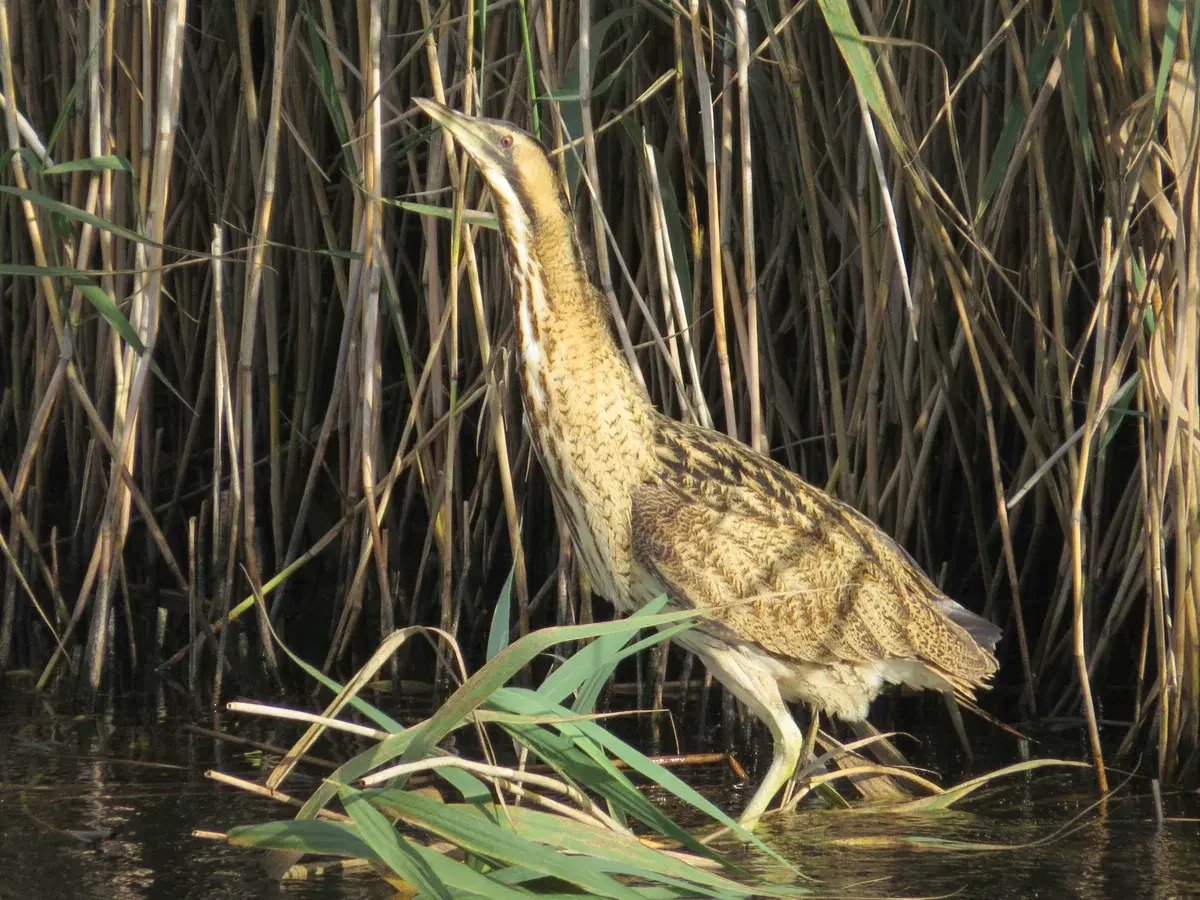
Bitterns breed at Gosforth Nature Reserve for the first time since 1956
Bitterns have successfully bred at Gosforth Nature Reserve this year, the first confirmed breeding there since 1956 and a first for Northumberland in around 70 years.
One of Britain's most secretive birds has raised young on Gosforth's doorstep. The Natural History Society of Northumbria (NHSN), which looks after Gosforth Nature Reserve, has confirmed that Bitterns bred successfully at the reserve in 2026, the first time since 1956.
A return after around 70 years
Historical records show that Bitterns last bred at Gosforth Park in 1956, and the society says the species had not been confirmed breeding anywhere in Northumberland for around 70 years. This year's breeding was confirmed after months of monitoring, with evidence including the presence of young birds.
Bitterns are notoriously hard to see. They spend their lives hidden in reedbeds and are far more often heard than seen, thanks to the male's deep, booming call in spring. The latest national survey recorded 283 booming males in Britain, and the species is continuing to expand its range in northern England. The NHSN notes that the Gosforth birds may be among the most northerly breeding Bitterns in England.
Hundreds of hours in the reeds
Confirmation came thanks in part to dedicated local birdwatchers, including Tom Quenet and Mike Natrass, who spent hundreds of hours patiently watching the reserve's reedbeds and gathering the photographs and observations that helped confirm the breeding.
NHSN Director Clare Freeman called it "absolutely fantastic news" and one of the most exciting developments the reserve has seen in recent years. "We know that Bitterns bred here in 1956, so this represents an extraordinary return after around 70 years," she said. "It is also a fantastic demonstration of the importance of protecting and managing reedbeds."
About the reserve
Gosforth Nature Reserve covers 61 hectares of woodland, wetland and reedbed in Gosforth Park, and has now recorded more than 1,600 species. It forms part of the Ouse Burn wildlife corridor, with the Ouse Burn Way linking it through Jesmond Dene to the Lower Ouseburn. You can read the full announcement on the NHSN website.
Can I visit?
The reserve is not a public park. According to the NHSN, it is open year-round to NHSN members and to anyone who buys a visitor pass, online or at the gate. Passes are £5 for adults, £2 for students (ID required) and £1 for children, with members getting in free and enjoying extended hours. Non-members can visit from 9am to 4pm, with last entry at 3pm. Only guide dogs are allowed on site, and children under 16 must be accompanied.
Bitterns remain shy, so a sighting is never guaranteed, and the reserve occasionally closes in strong winds. For directions, parking and what else to look out for, see our guide to Gosforth Nature Reserve.
Never miss what’s on
Join the weekly Gosforth.org digest — the best events, news and local tips, straight to your inbox. Free, one email a week.
What's On
Rich Hall: Chin Music
7:30 PM · Gosforth Civic Theatre, Regent Farm Road, Gosforth, Newcastle upon Tyne, NE3 3HD
Student Night Raceday, Newcastle Racecourse
See booking · Newcastle Racecourse, High Gosforth Park, Newcastle upon Tyne, NE3 5HP
Wetland Birds at Dusk
5:00 PM · Gosforth Nature Reserve, High Gosforth Park, Newcastle upon Tyne