Historic Trades and Crafts of Gosforth
Coal mining, blacksmithing, horse-drawn trams, and the Brandling family's industrial fortune -- the traditional trades and industries that shaped Gosforth from a rural township into a Victorian suburb.
Modern Gosforth is a residential suburb of wide avenues and comfortable houses. But before the Victorian builders arrived, this was a landscape of coal mines, farmland, and scattered settlements whose inhabitants worked the land and the seams beneath it. The trades that sustained Gosforth for centuries have almost entirely disappeared, but their traces remain in street names, buildings, and the shape of the place itself.
Coal Mining
Coal was the industry that made Gosforth. The Gosforth Colliery was sunk in 1825 by the Reverend R.H. Brandling, though coal was not successfully extracted until 31 January 1829, when a workable seam was finally reached at a depth of 181 fathoms. The colliery was worked successively by the Brandling executors, Bowes Hatt & Co, and John Bowes & Partners before closing in the 1890s.
The coal beneath Gosforth was part of the Great Northern Coalfield, and the families who owned the mineral rights -- above all the Brandlings -- became enormously wealthy. The Brandlings owned approximately 2,000 acres of Gosforth from 1509 to 1852 and were members of the "Grand Allies", the cartel of coal-owning families who funded the earliest railways in the region.
Today, the Brandling Villa and the Brandling Arms on the High Street carry the family name, but there is no visible trace of the colliery itself. The site is now covered by housing.
Best for: The Gosforth Colliery shaft had to reach 181 fathoms -- over 300 metres -- through a geological dyke before hitting workable coal in 1829.
Farming and Agriculture
Before the coal trade and long after it, Gosforth was agricultural land. The medieval township was a patchwork of open fields farmed in common strips, and agriculture remained the primary occupation for most residents until well into the 19th century.
The Town Moor, which still stretches across 1,000 acres to the south and west, is a surviving remnant of the common grazing land that served Gosforth and Newcastle. Freemen of the city retain grazing rights on the Moor to this day, and cattle are still put out to graze each summer.
Field names recorded in 18th and 19th-century maps -- Long Benton Field, Church Field, Moor Edge -- reflect the agricultural landscape that preceded the suburb.
Blacksmithing
Every agricultural community needed a blacksmith, and Gosforth was no exception. Blacksmiths shod horses, repaired ploughs, mended gates, and made the iron tools that farmers depended on. As the coal industry grew, the blacksmith's role expanded to include pit work -- repairing tools, shoeing pit ponies, and forging the ironwork needed underground.
The name survives in the area: the Blacksmiths Arms was a pub on Gosforth High Street, a reminder of the time when the forge was one of the most important businesses in the village.
The Tram Depot and Horse Work
One of the longest buildings ever constructed on Gosforth High Street was the tramway depot, built in 1884 between Ivy Road and Woodbine Road. This enormous structure housed three rows of stalls for 116 horses, a car shed, two manure stores, a harness room, a smithy, and a sawdust room.
The horse-drawn tram service connected Gosforth to Newcastle city centre and was one of the first public transport links to the suburb. The depot employed grooms, farriers, drivers, and labourers, and the constant demand for feed, straw, and horseshoes supported a network of related trades. The trams were electrified in 1901, and the horses disappeared.
Best for: The 1884 tram depot on the High Street held 116 horses and employed grooms, farriers, and smiths -- a small industry in itself.
Brewing and Malting
The availability of good water, barley from local farms, and a large thirsty population made brewing a natural industry. Several of Gosforth's older pubs were originally tied to local breweries, and malting -- the process of germinating and drying barley to produce malt for brewing -- was carried out in the area.
The pub names that survive on the High Street -- the Gosforth Hotel, the Brandling Arms, the Job Bulman -- are reminders of the era when each pub was the centre of a small commercial ecosystem that included a brewer, a maltster, a cooper (barrel-maker), and a cellarman.
Evidence That Remains
The physical traces of Gosforth's historic trades are subtle but present:
- Street names: Pit Lane (now buried under housing) marked the route to the colliery. Field Lane and Moor Road Edge reflect the agricultural past.
- Pub names: The Brandling Arms and Brandling Villa recall the coal-owning dynasty. The Gosforth Hotel's 1913 tiled facade marks the era of the brewery-owned pub.
- The Town Moor: The surviving common grazing land connects modern Gosforth directly to its agricultural origins.
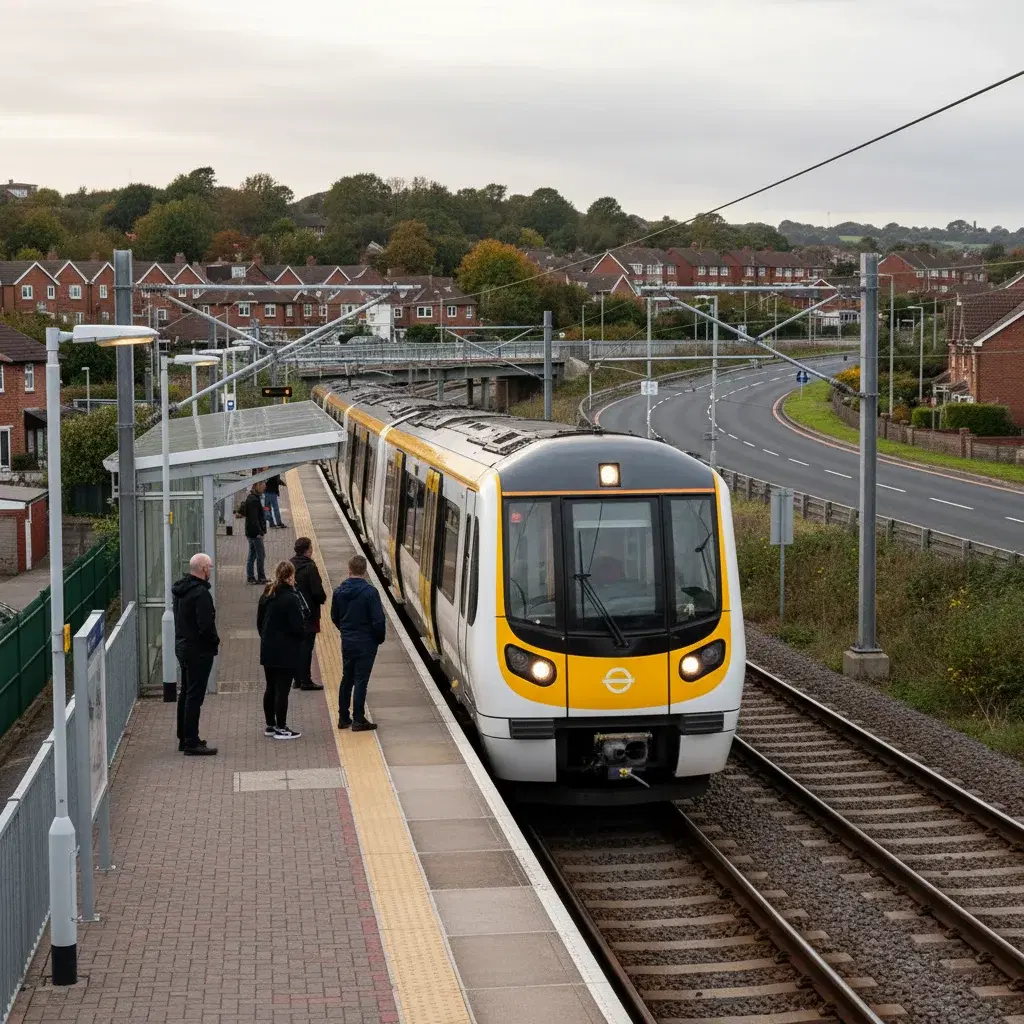
- The Metro depot: The Gosforth Metro depot on the site of the former railway sidings is the direct successor to the horse tram depot of 1884.
Frequently Asked Questions
Was there coal mining in Gosforth?
Yes. The Gosforth Colliery was sunk in 1825 and operated until the 1890s. It was owned by the Brandling family and later by John Bowes & Partners. The site is now covered by housing with no visible trace.
What trades were practised in Gosforth?
Gosforth's main historic trades were coal mining, farming, blacksmithing, horse-drawn transport, and brewing. The 1884 tram depot on the High Street employed grooms, farriers, and smiths for 116 horses.
What evidence of historic trades remains in Gosforth?
Street names (Pit Lane, Field Lane), pub names (Brandling Arms, Brandling Villa), the Town Moor grazing land, and the Gosforth Metro depot on the former railway sidings all preserve traces of Gosforth's historic trades.
Never miss what’s on
Join the weekly Gosforth.org digest — the best events, news and local tips, straight to your inbox. Free, one email a week.
What's On
Voices of Hope: 15 Years
7:30 PM · Trinity Church, Gosforth, Newcastle upon Tyne, NE3 4AG
Town Moor parkrun
9:00 AM · Town Moor, Newcastle upon Tyne
Mushroom Meander at Gosforth Nature Reserve
10:00 AM · Gosforth Nature Reserve, High Gosforth Park, Newcastle upon Tyne